

Expanding the Vision: Farming for the Commons
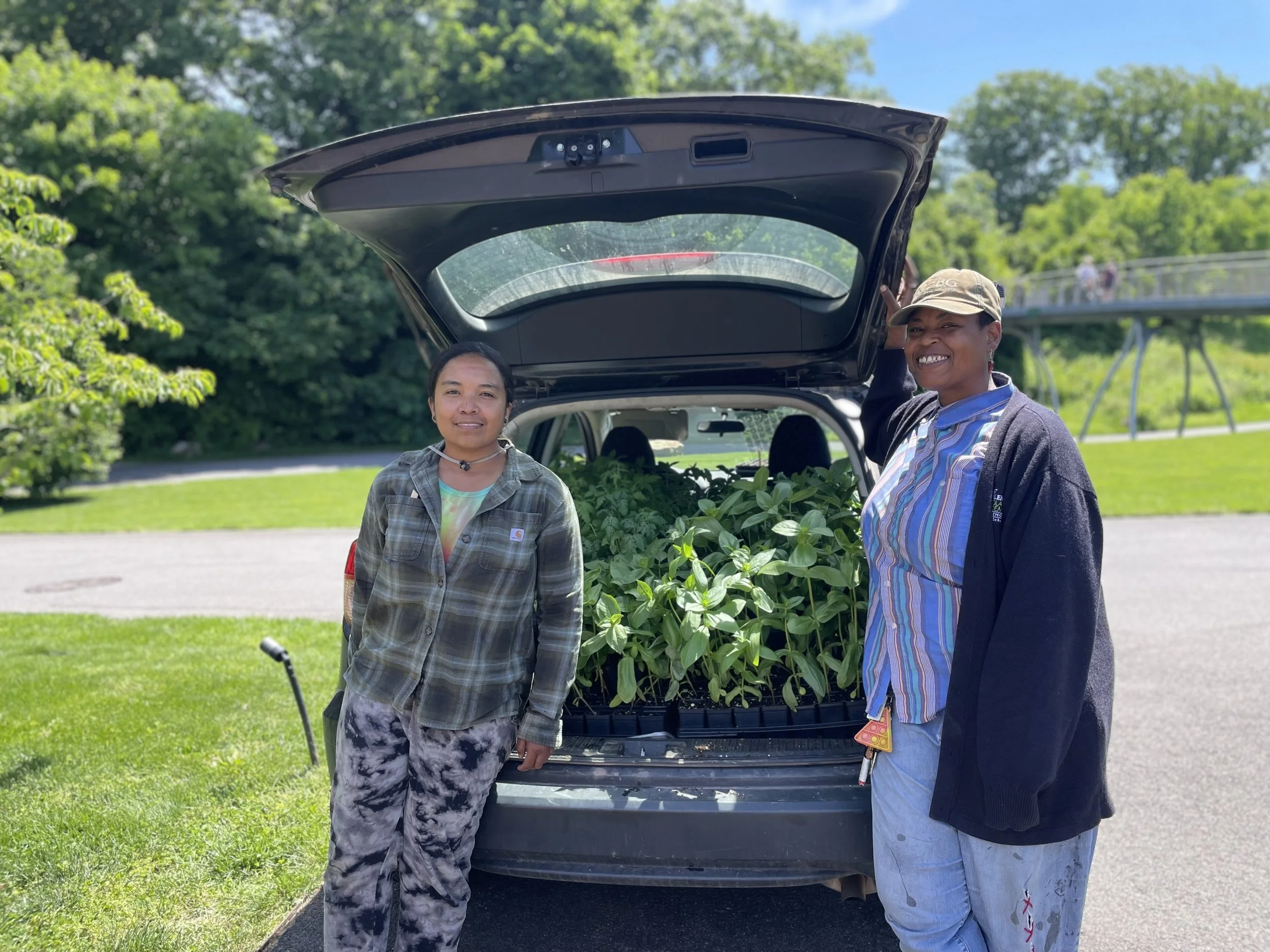
When we think of farming, we don't often picture Black and Brown people across generations working and farming together, or farming collectives that grow and distribute food to support their communities. We also don't picture entities like the Iridescent Earth Collective that exists as an agroecological farm project rooted in land stewardship, education, community health, and mutual aid. Who do we consider a farmer, and how can we as a society make it easier for such communities and collectives to thrive?
Voices from the Land is a collaborative op-ed and video series between Farm School NYC (FSNYC) and the New Harvest Project (TNH) that highlights urban and rural farmers, policy that impacts their work, and what we can do to uplift legislation reflective of their needs to direct future policy decisions. This project is funded by the Regenerative Agriculture Foundation (RAF) through the Rural Advancement Foundation International - USA (RAFI).
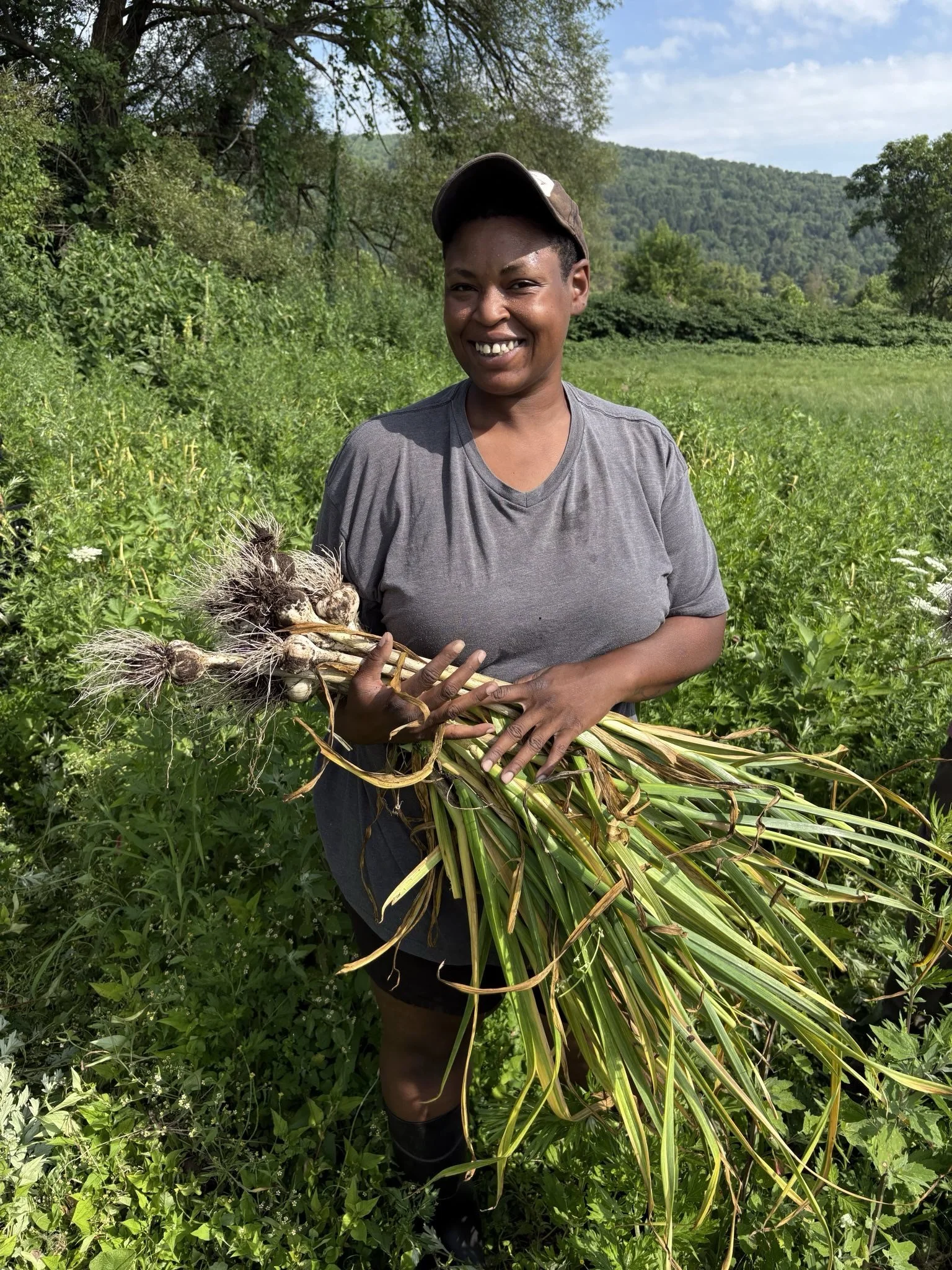
When we think of farming, we don't often picture Black and Brown people across generations working and farming together, or farming collectives that grow and distribute food to support their communities. We also don't picture farmers in places like the Bronx growing food for their neighbors during a public health crisis like the COVID-19 pandemic.
Who do we consider a farmer, and how can we as a society make it easier for such communities and collectives to thrive?
What's Missing in Agricultural Policy
So the Farm Bill is a major piece of legislation. It affects investments in farming, natural resources, small-scale local farms—really the whole agricultural industry, among other areas. The bare minimum is “to ensure that farmers/producers (small and large) can continue to supply our nation with affordable food”. A large chunk of the Farm Bill includes $6 billion for conservation farming, which ensures the sustainability of our industry and supports biodiversity. The broader bill also invests in rural communities (where I live and love), state economies, and jobs. Every five years, the Farm Bill is renewed. The most recent bill expired after a five-year cycle in October 2023. Then in March 2025, the Trump Administration canceled the American Climate Corps program, which was set to train a new generation of conservation and climate leaders. The Farm bill operated by having some parts of it extended before its renewal in April 2026.
What’s now missing are billions of dollars meant to support small farms like my own, Iridescent Earth Collective. For example, the US Department of Agriculture’s (USDA) Environmental Quality Incentives Program (EQIP), a cost-sharing program for farmers looking to implement conservation practices on their farms, has been gutted. Farmers now have fewer resources to build resilience into their work. Alongside that, USDA Secretary Rollins canceled the $1 billion Local Food Purchase Assistance Cooperative Agreement Program (LFPA), which connected small farms to schools. Additionally, cuts to the USDA have led to a staffing crisis. One example is the Farm Service Agency staff losses, which now puts farmer safety nets at risk. This downsizing in federal support comes on top of rising production costs, low crop prices, and cuts to investments in beginning and young farmers.
So much of the community-centered food production and distribution across New York and nationwide is led by local groups, religious organizations, and small-scale farms like my own, Iridescent Earth Collective (IEC).
I grew up in the Highbridge section of the Bronx, spending much of my early years at the Taqwa Community Farm, which seeded my love for farming and community work. I worked in the Bronx and throughout the city for over a decade, growing and distributing fresh food. Leading up to the pandemic, my partner Jessica Tobon and I were working with Bronx Green-Up, a community gardening outreach program of the New York Botanical Garden that works with Bronx residents, schools, and organizations.
At the start of the pandemic, I witnessed firsthand how quickly food insecurity could deepen in the place I call home.
The food lines had more than tripled and the community gardens were empty. We suggested working with folks to produce and distribute food locally. Once the program started growing food for the community, something clicked and I realized that this was my calling.
Models For Land Access And Community Support
Iridescent Earth Collective (IEC) was created in 2021 with several members, including Jessica and me, the remaining founders in 2026. IEC is an agroecological farm project rooted in land stewardship, education, community health, and mutual aid. Our home is the West Branch Commons (WBC), a 287-acre community land trust that offers long-term, affordable land access centering Queer & Trans, Black, Indigenous, and people of color (QTBIPOC) farmers via long-term ground leases. The Catskills Agrarian Alliance (CAA) has been shepherding WBC since 2021, alongside a volunteer team of local farmers and organizations inspired by worker-cooperative principles and the international peasant-farmer movement. Because the cost of farmland is the key prohibitive factor for beginning farmers, the work of WBC remains critical
CAA found Tommy Hutson, an aging fourth-generation dairy and meat farmer looking to transfer his land to the next generation. Tommy was already working with organizations such as the American Farmland Trust and the Watershed Agricultural Council to develop easements to protect the land from development, but he had no transition plan to keep the farm in active agricultural production.
CAA facilitated a meeting between Tommy and IEC—we all agreed from the very beginning that this land was meant to be stewarded, not extracted from. We quickly began working with WBC, which helped us preserve this farmland, supported Tommy's transition to retirement, and offered IEC secure land tenure.
Small Farms and Community Food
One way that we steward both the land and community is through mutual aid. IEC’s land project is a small-scale 3-acre farm that produces food for local and regional distribution. All of the food we grow goes to the local food banks and Bronx distribution points in need. The farm’s support network grew in 2023 with mentorship, equipment, and infrastructural support from local farms River Haven Farm (Tommy’s old farm), Berry Brook Farm, and Lucky Dog Organic Farm. There is also a swell of local and regional volunteers. Despite stimulating local businesses like Farmers’ Lunch and the Hamden General Store, there is often leftover produce. IEC began coordinating with Berry Brook Farm to donate that food as well. Pantry staff and clientele are often surprised to learn that all the food is fresh and locally grown. The corporate donation model is challenged when we deliver fresh and locally grown food, and we create pathways for community members to access fresh and nutritious food and connection points to us as small-scale farmers. We’re all happy to do it as members of this community.
Right now, IEC operates as an LLC with a fiscal sponsorship, and our model draws on non-profit and cooperative models. Outside of farming, IEC also provides workshops, training, local events, apprenticeships, hosts gathering parties, and offers low-pressure entry points to farming for community members. We do spend much of our time fundraising — which I know is not sustainable in the long term. However, it could be if the USDA offered funds for projects like this. Funding could support community capacity building, local innovation, collaboration, and sustainability.
There are programs within the USDA that already fund a specific kind of farmer—mainly farmers growing row crops, and that's not what we do. The agency needs to expand the kinds of farmers it funds, as small- to medium-scale farms produce the rest of the food people eat. We produce the variety in foods. We can sell what's ripe and in season while stewarding soil and native plant ecosystems. At the core of this work is a deeply rooted value that all communities should have access to this on a basic human level. We need more federal programs specifically designed to support this kind of hyperlocal food distribution work. Programs administered through agencies such as the Natural Resources Conservation Service (NRCS) and Farm Service Agency (FSA) can be transformative, but funding and staff cuts slow administration and bottleneck the system.
Iridescent Earth Collective breaks the traditional models of what a farm is—not just a business but a community institution.
We exist as a source of education, food security, environmental stewardship, and cultural connection. We build relationships between neighbors and create resilience during times of crisis. There’s no doubt that American agriculture requires large-scale production. It also, and more importantly, requires small-scale farms to feed communities directly, steward local land, and provide safe spaces for all young farmers, especially those of color, moving the future of agriculture and community forward.
You can also watch Kitty’s full interview here.
Food As the Entry Point
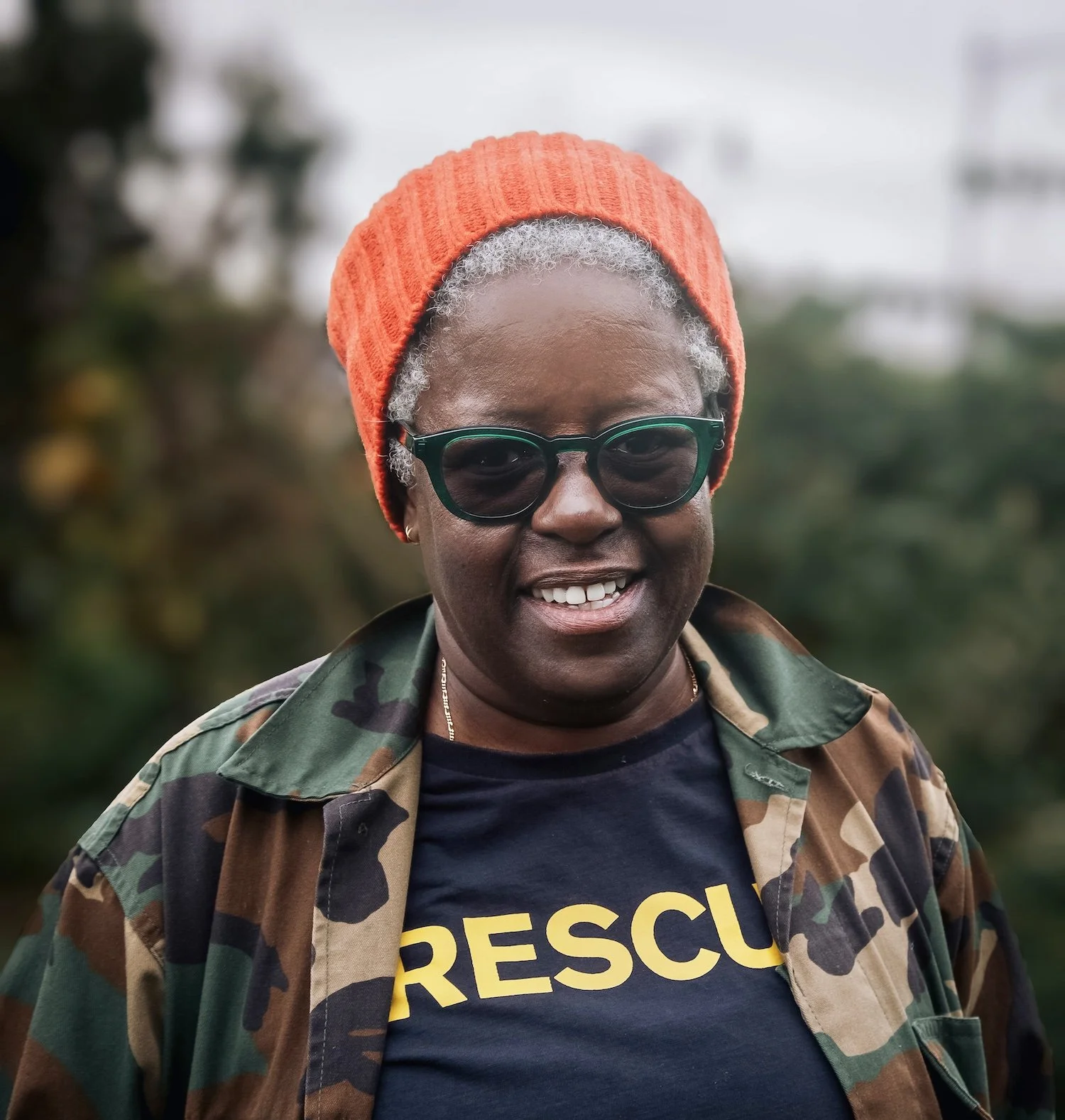
Food is the entry point to advancing justice as it is communal, cultural, and conversational. Here’s how Sheryll Durrant, steward or the Kelly Street Garden and IR”s New Roots Program sees food as infrastructure
Voices from the Land is a collaborative op-ed and video series between Farm School NYC (FSNYC) and the New Harvest Project (TNH) that highlights urban and rural farmers, policy that impacts their work, and what we can do to uplift legislation reflective of their needs to direct future policy decisions.
This project is funded by the Regenerative Agriculture Foundation (RAF) through the Rural Advancement Foundation International - USA (RAFI).
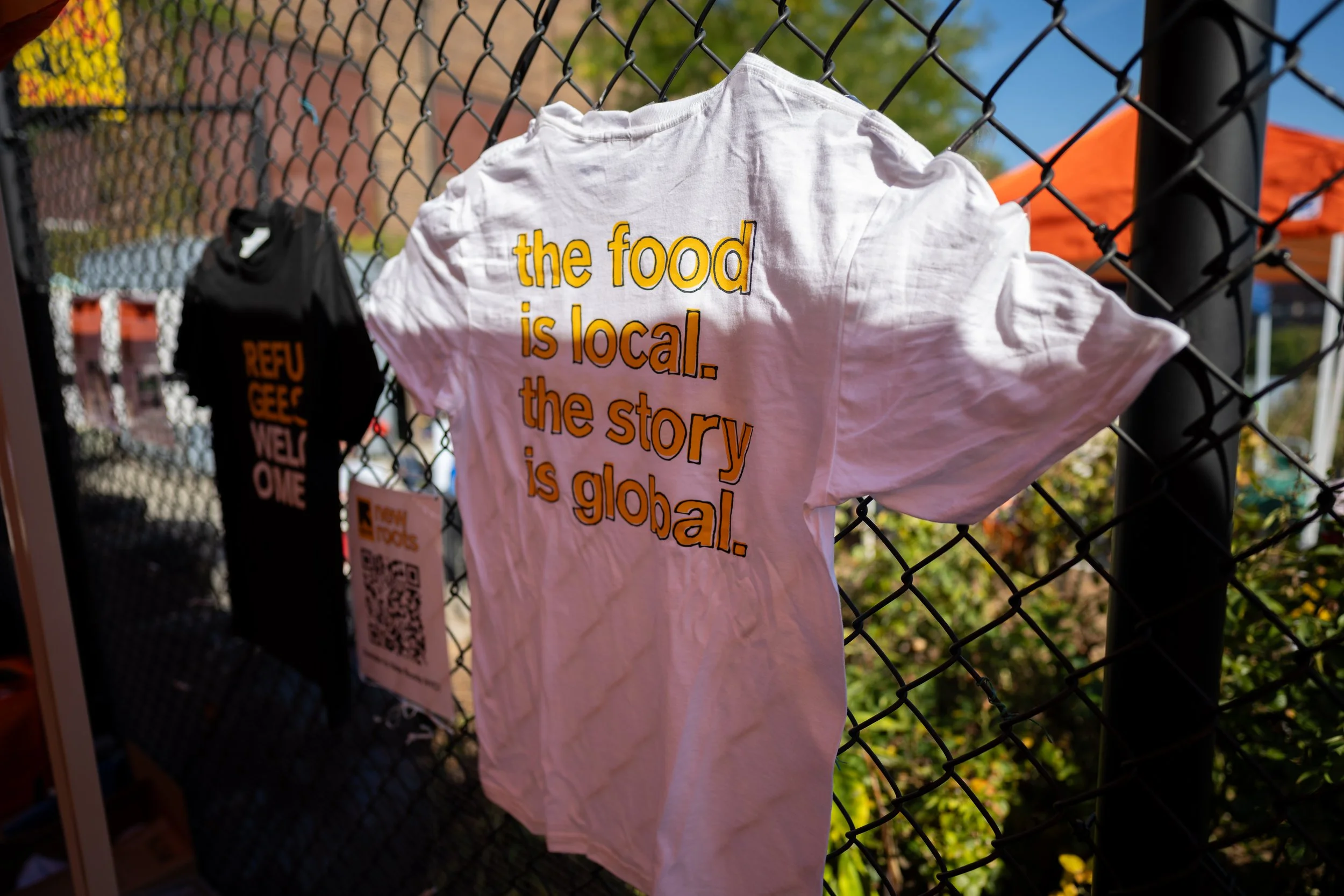
Food is the entry point to advancing justice as it is communal, cultural, and conversational.
It’s also a critical part of breaking down barriers and a way for people to get to know themselves. Food may seem like a simple entry point, but it is also a part of a fundamental truth: food is infrastructure.
It is as essential to a functioning society as housing, transportation, and energy. But often, food and these very same issues are thought of, solved for, and regulated in silos. This also contributes to the failure to treat the city’s deepening inequality, worsening public health, and accelerating climate vulnerability.
But there is a different model we can turn to, as I am living it.
My food justice work takes place in two primary spaces. The first is that I’m the food and agriculture coordinator for the IRC New Roots Program, a green space program open to refugees, immigrants, and recent asylum seekers, focused on food access and education. Alongside free educational workshops, the program also holds community-based farms. The first is a half-acre farm in the South Bronx, off the Grand Concourse, and a smaller community garden in Woodside, Queens. All community members in the New Roots Program are welcome to come and get free produce, no questions asked. Sometimes people approach with a kind of shame in the fact that they are food insecure, and we want to dispel that. Many people,across New York City, particularly those in my community of the South Bronx, are food insecure. I want to make clear that these people are the working poor—meaning we work and are employed, but still have to juggle expenses such as rent, utilities, medical bills, and groceries.
The other space I tend to is the Kelly Street Garden, which is where I call home. The garden runs along the back of four affordable housing buildings and is embedded in the community. I extend the same level of care and programming here as I do with the IRC New Roots Program. Growing up in Jamaica, my mother would tell us to go pick something in the yard for dinner. I never realized then, but looking back, we were wealthy because we were on our own land. My father would grow watermelon, mangoes, oranges, lemons, corn, breadfruit, and so many other vegetables and fruit. Now as I steward the Kelly Street Garden and work with the New Roots Program, I remember how privileged I was growing up.
But outside of those spaces, nowhere is the food system disconnect more visible than in the South Bronx.
The Hunts Point peninsula is home to one of the largest food distribution centers in the country, with 4.5 billion pounds of food passing through its Food Distribution Center each year. Yet much of that food never reaches the people in the immediate area. While the center is critical to the entire region, its aging infrastructure, the pollution it brings to the surrounding area, and its location in a flood zone make it no longer sustainable. The environmental pressures it imposes on the South Bronx exacerbate many of the area’s health issues. Heavy-duty trucks come and go from the hub at all hours, and just a few blocks away is the Bruckner Expressway, which adds further environmental pressure.
This is not an accident. Intentional policy decisions have concentrated these burdens in already marginalized neighborhoods.
Climate Policy Must Include Food Systems and Land Access
Urban agriculture is also climate policy.
New York is a concrete jungle. And we continually prioritize this kind of landscape despite intensified heat, flash flooding, and increased air pollution impacting the city. Community green spaces counteract these effects. We know that these green spaces absorb stormwater,reverse the heat island effect, and improve mental health—so why aren't we building that way?
To me, this is a policy failure.
If lawmakers are serious about climate resilience, they must move beyond siloed approaches. It's not just about affordable housing or maximizing land use. It’s about paying attention to what makes a livable city. When you integrate the natural environment, we can then begin to properly address housing, education, and public health. My request for urban planners is to think about how you can push the boundaries of greening a building. How can vegetation grow on the side of a building? How can we have more permeable surfaces for water to penetrate? This is how we move toward climate adaptation.
Climate adaptation directly connects to a more just and sustainable system. This can start with food sovereignty. Land should be for the commons, and farmers and communities should have control over how food is grown, distributed, and consumed. All of us should have access to and be able to steward land and grow the types of culturally relevant food we need. This kind of sovereignty would require us to be in deep community. But as of now, the only way to have access to land is through monetary gain. That is part of a larger conversation of colonialism and capitalism.
Access to land is the foundation of any community-led food system. Without it, food sovereignty is impossible. Yet here in New York City, land access remains one of the greatest barriers to scaling community agriculture. We cannot continue to have just a few people owning the means of production. Even farmers who believe in mutual aid, are mission-aligned and justice-oriented, have a hard time embracing food sovereignty because the current system just does not favor it.
One promising concept introduced by Mayor Mamdani is the city-owned grocery. This aligns with my belief that food should be free or, at the very least, low-cost and accessible. However, will these grocery stores be connected to the local food system? Local and regional farmers need to be brought to the table as this could be a critical entry point to make the city self-sufficient. City-owned grocery stores could also be what takes the food and agricultural economy out of corporate hands.
Investing in the Next Generation
We need to equip the next generation with the tools and lessons to achieve community-led food systems. More intergenerational spaces and more opportunities must be created for young people to lead. The community gardening movement in New York has long been sustained by grassroots organizers—many of whom are now aging out of leadership roles. Without intentional investment in younger leaders, knowledge and infrastructure could be lost.
A more just and sustainable future will not come from maintaining the systems we have—it will come from having the courage to dismantle them and build something rooted in land, care, and collective responsibility.
You can watch Sheryll Durrant’s full conversation with Iris M. Crawford-Maskell here.