

What Happens When Farmers Can’t Afford Justice?
For Black farmers, financing isn't as simple as turning in an application, submitting the necessary paperwork, and getting approved. For decades, Black farmers have faced extreme challenges, especially when trying to access the systems that are supposed to help farmers farm. That still rings true today.
Voices from the Land is a collaborative op-ed and video series between Farm School NYC (FSNYC) and the New Harvest Project (TNH) that highlights urban and rural farmers, policy that impacts their work, and what we can do to uplift legislation reflective of their needs to direct future policy decisions. This project is funded by the Regenerative Agriculture Foundation (RAF) through the Rural Advancement Foundation International - USA (RAFI).
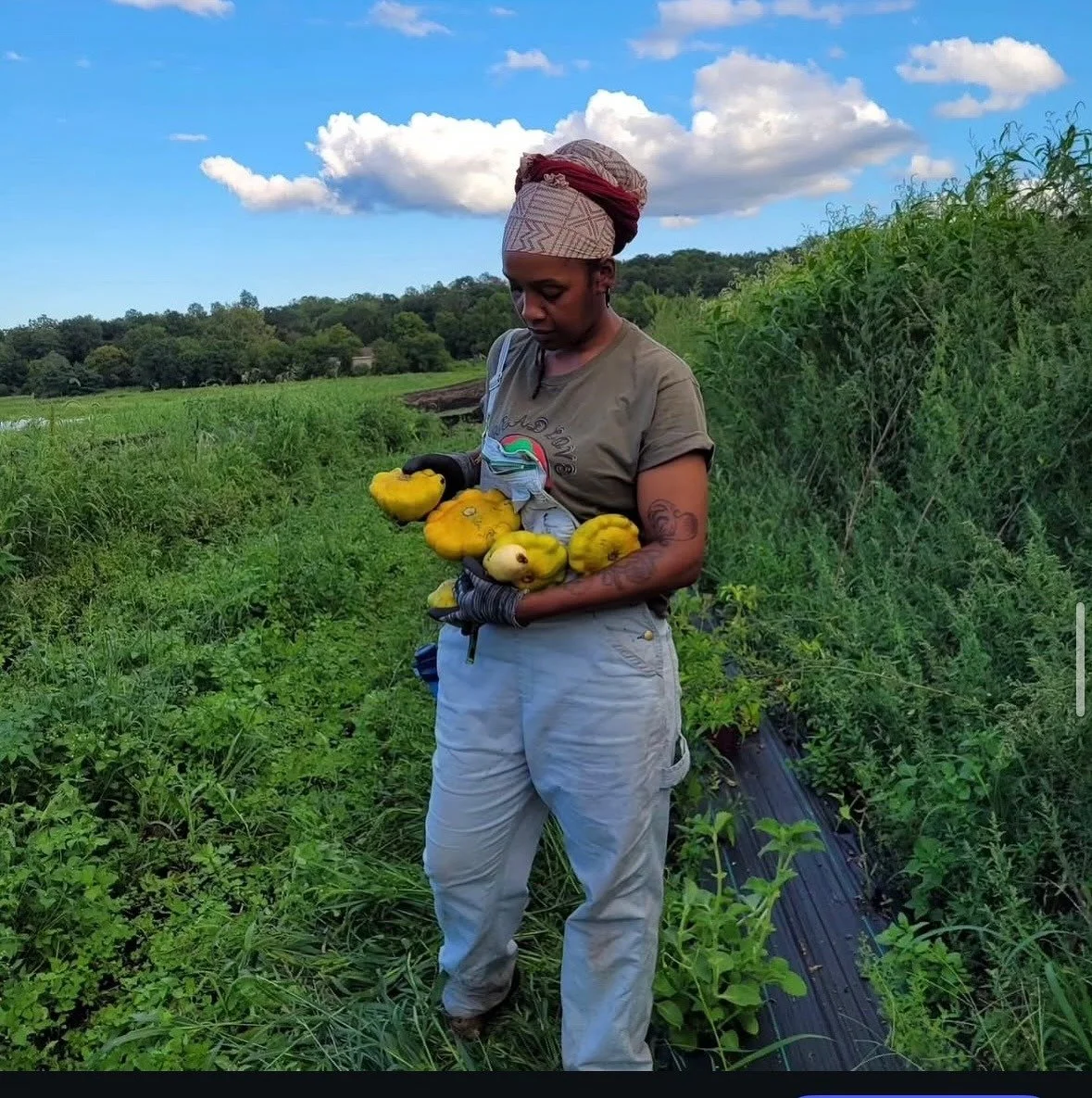
Photo Courtesy of Liberation Farm
Even when Black farmers get justice, the damage isn’t undone.
I am the co-founder of Liberation Farm, a Black-owned farm spanning Ulster and Orange counties in New York. The farm, focused on Black Liberation and food sovereignty, grows culturally relevant foods including okra, calaloo, Ethiopian kale, tiger eye beans, eggplant, and other crops that connect food to the cultures and communities we serve.
Liberation Farms also hosts volunteer days, workshops, and camping programs throughout the year. Our biggest event each year is Black VegFest, founded by Omowale Adewale, Liberation Farm’s co-founder and my husband. Black VegFest is a vegan gathering that draws thousands and is centered on nutrition, herbalism, delicious vegan food, food sovereignty, and land equity. It is also a space for communities to learn about and have meaningful control over what they eat and where their food comes from.
Like any other farm, we seek governmental funding to sustain our livelihood. But for Black farmers, financing isn't as simple as turning in an application, submitting the necessary paperwork, and getting approved. For Black farmers and other farmers of color, it can look like endless, confusing paperwork and being asked to show excessive proof of our farm business at every step. In 2023, we applied for a low-interest loan from the Farm Service Agency (FSA) but were denied financing. We decided to fight and appealed through USDA's National Appeals Division—and won. A judge found the agency's decision to be egregious and ruled that we should have been approved for the financing.
While the appeal’s ruling established that the FSA agency got this wrong, Liberation Farm did not get the low-interest loan it initially applied for. We also did not get back the months spent waiting, the money spent on legal assistance, and the production lost. We lost our farm because of this.
For decades, Black farmers have faced extreme challenges, especially when trying to access the systems that are supposed to help farmers farm. We can look at the landmark Pigford v. Glickman lawsuit in 1999 and 2010. The collective $2.2 billion settlement was the first acknowledgment of the discrimination Black farmers faced in getting federal resources, which eventually led to our decline in numbers in the decades to come.
We must also talk about the catch-22 of reimbursement policy. Many federal funding programs are reimbursement-based, meaning you have to pay upfront and then get repaid later.
Reimbursement assumes a farmer has enough reserves to spend $50,000 or $100,000 before the government repays them.
Some federal agencies have acknowledged this issue, and underserved growers can receive advance payments precisely because upfront costs can be prohibitive. While this sounds good in theory, there is a distinction. A farmer who has to borrow money to complete a project while waiting for reimbursement will have a different experience than a farmer with enough capital to absorb the delay. It can set the former back while propelling the latter forward.
This pressure became especially visible following the return of the Trump Administration. The USDA froze or paused funding for various agricultural and conservation programs, leaving farmers in the dark about when—or whether—reimbursements would ever arrive.
Making CSA Work for Everyone
Liberation Farm remains committed to its community and one way we do this is through our CSA (community supported agriculture) boxes and SNAP (Supplemental Nutrition Assistance Program).
SNAP recipients use their benefits at participating farms or farmers markets. These SNAP dollars make fresh and nutritious food that much more accessible while directly supporting farms. So for a farm like Liberation Farm, a customer can purchase fresh produce food they might otherwise struggle to afford while a farmer generates revenue that can be reinvested in the operation.
This is an example of what good food policy should do: connect food access, boost farmer viability and community power. A program like this works because farmers can actually access it.
To have a food policy like this, the onus cannot just be on farmers. Advocacy must come from everyone. The first step is learning who is doing this work. Follow farmers' organizations like Black Farmers United, Northeast Farmers of Color, FarmSchool NYC and others who are directly investing in preserving the legacy and futures of farmers. We must be intentional about where we put our time and resources.
If we want a food system that serves all of us, then Black farmers and farmers of color cannot be treated as an afterthought within agricultural policy. Their farms are businesses, but they are also classrooms, cultural institutions, gathering places and sources of community health.
You can watch Nadia’s full interview here
New York has the Infrastructure to Keep Food Affordable and Local. It just needs Investment.
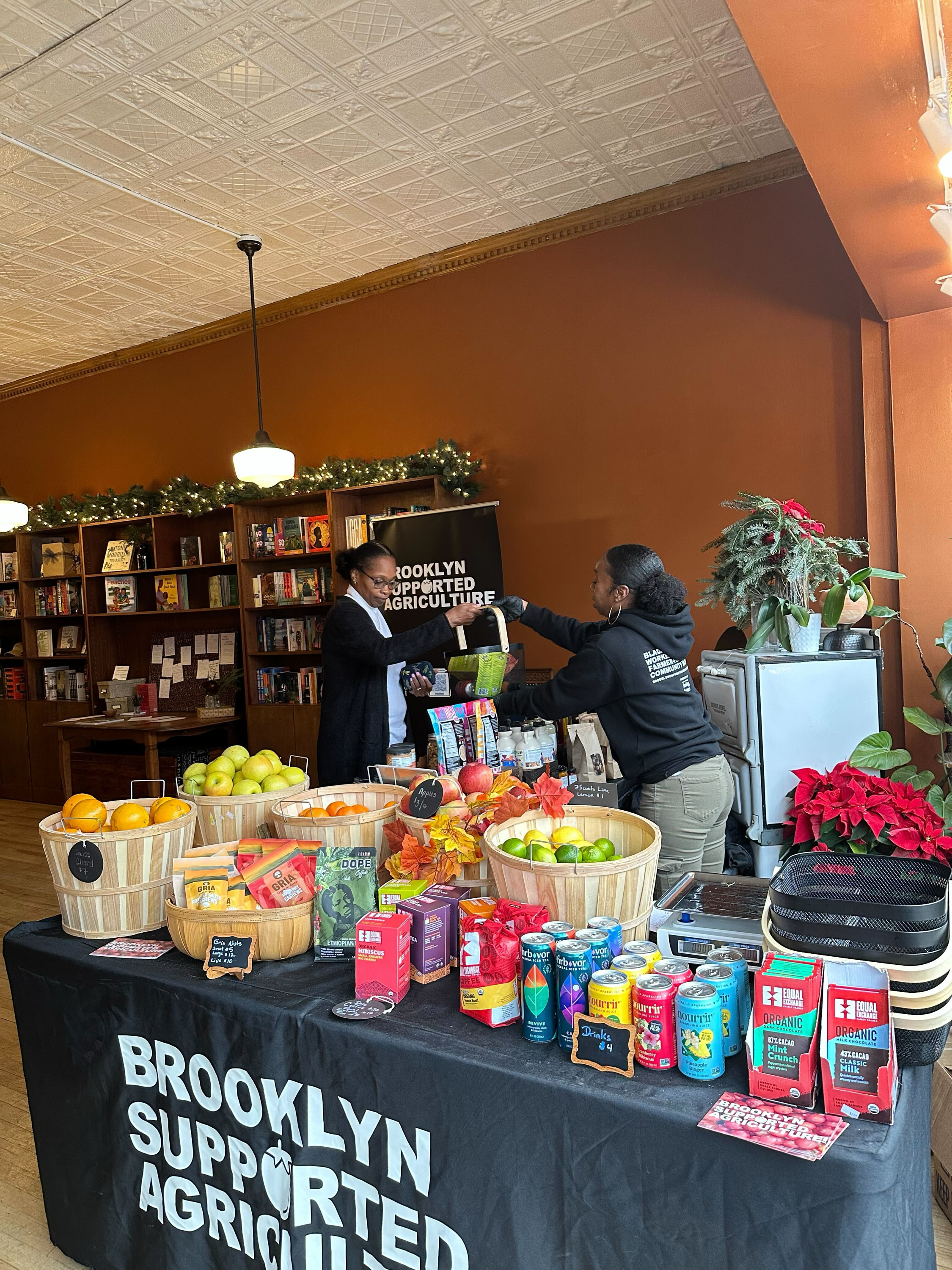
You don't have to look hard to find worker-owned cooperatives, community food hubs, local distributors, and independent growers that have built the infrastructure needed to move fresh food from farms throughout the Hudson Valley, the Catskills, western New York, New York City, and beyond. That's exactly what Brooklyn Supported Agriculture does.
Voices from the Land is a collaborative op-ed and video series between Farm School NYC (FSNYC) and the New Harvest Project (TNH) that highlights urban and rural farmers, policy that impacts their work, and what we can do to uplift legislation reflective of their needs to direct future policy decisions. This project is funded by the Regenerative Agriculture Foundation (RAF) through the Rural Advancement Foundation International - USA (RAFI).
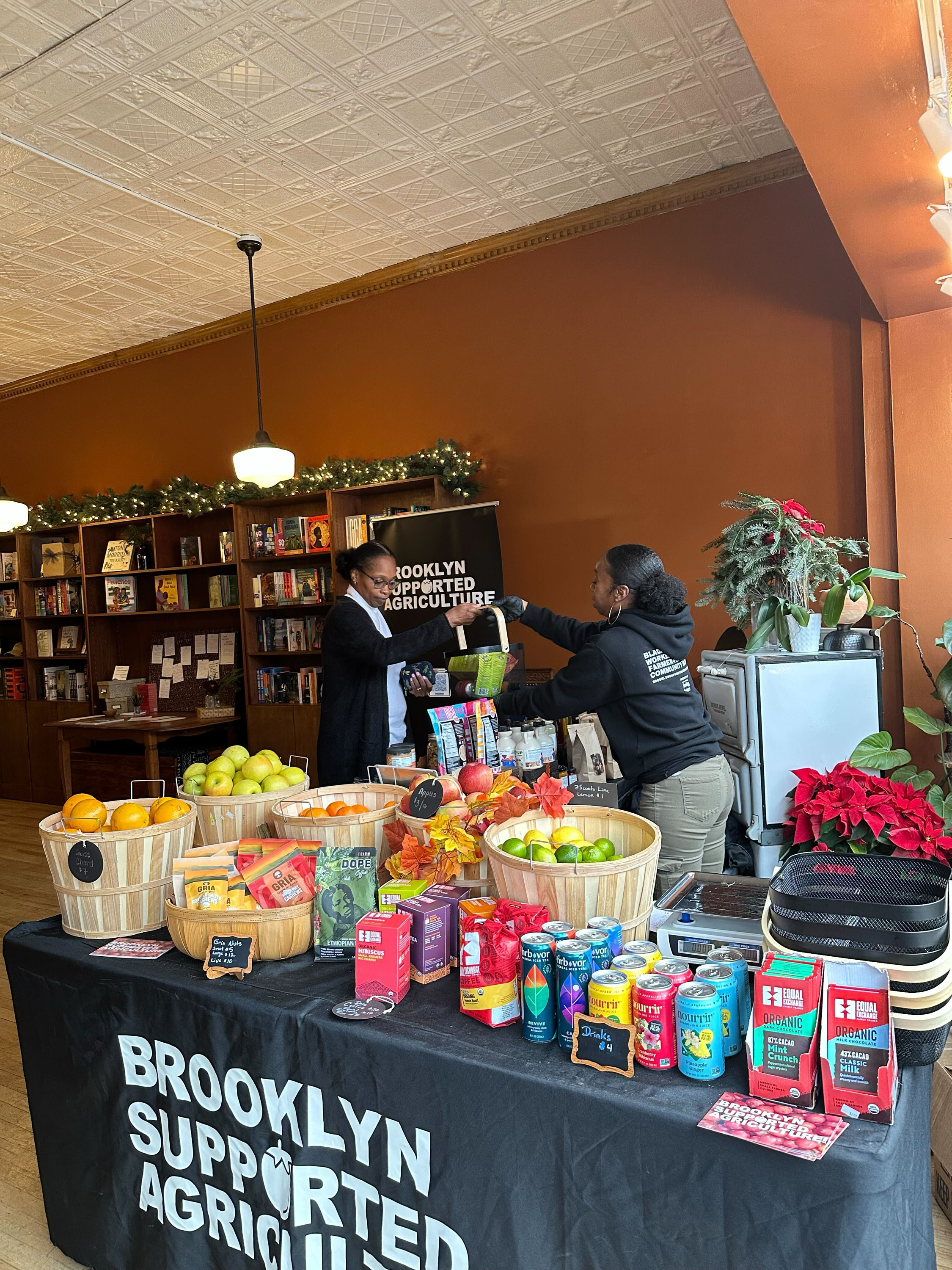
Photo Courtesy of Brooklyn Supported Agriculture
New York has an opportunity to rethink what affordability and local food actually mean.
You don't have to look hard to find worker-owned cooperatives, community food hubs, local distributors, and independent growers that have built the infrastructure needed to move fresh food from farms throughout the Hudson Valley, the Catskills, western New York, New York City, and beyond. That's exactly what Brooklyn Supported Agriculture (BSA), the organization I co-founded with Shawn Santana in 2016, does as a worker-owned cooperative focused on changing the food system. However, one key hindrance to our local ecosystem is institutional food procurement—a process that allows institutions such as universities and hospitals to source food and other services from the lowest bidder.
We have built a food system that treats food like any other commodity. Consumers expect the lowest price. Contracts are awarded to entities—in this case, farm and food aggregators—that can supply food and services at the lowest cost. This means that large corporations, institutions, and agencies can maximize their bottom lines. But the farmers and farmworkers growing our food and the small businesses trying to make fair prices work for everyone get squeezed.
For me, this is where the tension lives.
While the cheapest offer wins, food quality and fair wages are often disregarded, failing to reflect the true cost of growing food. The result is a system where schools, hospitals, and senior centers receive inexpensive food that is likely not the most nutritious. This begs the question of why we aren't prioritizing the health of our elders and youth. At BSA, we are always doing a delicate dance to get our farmers the highest price we can for the labor and care they put into growing our food, while making sure we offer prices our customers can afford.
It has been encouraging to see legislation such as the Good Food NY Bill that pushes municipalities to “consider other factors when determining best value,” rather than just the lowest cost. The bill, inspired by The Good Food Purchasing Program, supports institutions in shifting toward a values-based procurement model that prioritizes five key aspects: local economies, animal welfare, environmental sustainability, nutrition, and a valued workforce, to hold institutions more accountable in their practices and procurement decisions. Focused on supporting small and historically marginalized farmers and food vendors, this is a step in the right direction toward creating an equitable, local food system while helping organizations like BSA secure larger contracts.
Can City-Owned Groceries and Small Farm and Food Businesses Work Together?
Rather than building entirely new food systems, New York should strengthen its existing networks. The forthcoming city-owned grocery stores proposed by Mayor Mamdani’s Administration offer an opportunity to do so. For BSA and for where we stand as activists and business owners, the critical question is whether these new grocery stores will strengthen the existing ecosystem or simply recreate the same supply chains under a different name. Other questions we have are:
Will local farmers have a seat at the table?
Will worker-owned cooperatives and the existing local food ecosystem be part of the initiative?
How might local farmers and this Mayor’s office work together to strengthen food access?
While the five proposed grocery stores will not transform New York City's food system overnight and will face logistical challenges, we must acknowledge how incredible this bold idea is. This is the kind of experimentation that helps public systems improve. At the same time, community food enterprises, like BSA, Corbin Hill Food Project, Connected Chef and many other community food hubs, and regional logistics organizations have spent years solving problems that the government now hopes to address.
We have relationships with farms. We know how to aggregate produce, manage refrigerated transportation, and deliver fresh food into neighborhoods that have historically lacked access. I see these city-owned groceries as an opportunity to work together. We have shared our concerns and guidance in a white paper in collaboration with Equity Advocates, Catskills Agrarian Alliance, New York City Network of Worker Cooperatives, and other partners. Prioritizing Affordable, Quality, Neighborhood-Based Supermarket Access as a Public Good: Focus on City-Owned Supermarkets and Complementary Cooperative Ownership Models makes recommendations for how NYC’s city-owned grocery stores can succeed while grounding what a solidarity economy could look like for our food system.
While much of our food is now through apps and fast-delivery platforms, one focus of BSA is to bring back face-to-face relationship-building. Over the past few months, we’ve been doing more pop-ups and community-focused events such as our recurring pop-up at BEM Books & More, Brooklyn Children’s Food Festival and Black VegFest, alongside our new updated storefront in Bed Stuy, Brooklyn. We are seeing that people want more opportunities to interact with us and each other, and this is how we can continue to build community.
If we truly want a resilient local food system, we don't need to invent one from scratch. We need the political will and opportunities to support the one that's already growing around us.

Know Your Farmer: Addressing the Heart of Food Insecurity in Kensington
Kensington, a neighborhood in North Philadelphia, is getting a fresh-produce corner store to tackle the lasting impacts of food apartheid.
Cities across the United States continue to deal with the lasting impacts of food apartheid, an intentional system of violence perpetrated through disparities in food access. Food apartheid also underscores how other structural injustices, such as redlining and over-policing, have limited the access to fresh, nutritious, and affordable food.
Kensington, a neighborhood in North Philadelphia is a prime example of food apartheid. But one Philadelphia farmer, Christa Barfield, owner of the community farm and greenhouse FarmerJawn, is looking to combat this issue directly with a new farm-to-corner storefront called CornerJawn, aimed at improving the health outcomes and social fabric of the Kensington community.
Barfield began dreaming up CornerJawn after a trip to Martinique in 2018, where she stayed in an Airbnb owned by Black Martinican farmers. Barfield was inspired by them to better understand the origins of food and its actors in her community: “Where are the farms, and where are people getting their food and why?” In her own neighborhood, corner-stores owners were hesitant to sell fresh produce because they were afraid it would not sell. That is when Barfield began to conceptualize a corner store that would offer “food as medicine” to the community.
The Need for Nourishing Food
While there are many places to buy food in Kensington, Barfield points out that there’s a lack of nutritional security. From 2021 to 2024, food insecurity in the Philadelphia area jumped from 13.6 percent to 21.2 percent. Statewide, one in seven Pennsylvania residents used the Supplemental Nutrition Assistance Program (SNAP) in 2024.
“Yes, you can find a mini mart that is selling some kind of nourishment, but is it really nourishing? That’s the true conversation here,” said Barfield in an interview with NPQ. “Localizing the food system is how you get to the heart of nutrition security, and that starts with knowing who your farmer is.”
Read the full story on NPQ